Wednesday, June 14, 2006

Three Some and More Pooches.


Bunch of Pooches:
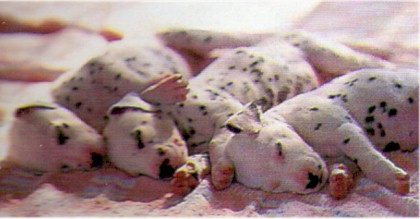
We should be on the Queen's Album Cover.


Relaxing Three Pooches.


Three Trend-Setters.


We are four sisters.


Summer Days of Three of Us.


Our Sleeping Habit
'Sleeping Together; Stays Together!'


Colorful Three of Us:
'Aren't We Adorable?'


Monday, June 12, 2006

How to Tell Your Pet Has a Cancer?

Signs of Ill Health

Only a healthy pet is a happy companion. Assuring your pet's daily well-being requires regular care and close attention to any hint of ill health. The American Veterinary Medical Association therefore suggests that you consult your veterinarian if your pet shows any of the following signs:

  • Abnormal discharges from the nose, eyes, or other body openings
  • Loss of appetite, marked weight losses or gains, or excessive water consumption
  • Difficult, abnormal, or uncontrolled waste elimination
  • Abnormal behavior, sudden viciousness, or lethargy
  • Abnormal lumps, limping, or difficulty getting up or lying down
  • Excessive head shaking, scratching, and licking or biting any part of the body
  • Dandruff, loss of hair, open sores, and a ragged or dull coat.
  • Foul breath or excessive tarter deposits on teeth

Cancer

How Common is Cancer?
Cancer is common in pet animals, and the rate increases with age. Dogs get cancer at roughly the same rate as humans, while cats get fewer cancers. Cancer accounts for almost half of the deaths of pets over 10 years of age.

How is it Diagnosed?
Strong circumstantial evidence of cancer can be attained from x-rays, blood tests, the physical appearance of the cancer, or the physical signs caused by the cancer. Most cancers, however, will require a biopsy (removal of a piece of tissue) for confirmation.

Is Cancer Preventable?
Some cancer, such as breast cancer, is largely preventable with early spaying. Unfortunately, the cause of most cancers is not known and therefore prevention is difficult.

Common Signs of Cancer in Pets
  • Abnormal swellings that persist or continue to grow
  • Sores that do not heal
  • Weight loss
  • Loss of appetite
  • Bleeding or discharge from any body opening
  • Offensive odor
  • Difficulty eating or swallowing
  • Hesitance to exercise or loss of stamina
  • Persistent lameness or stiffness
  • Difficulty breathing, urinating, or defecating

Many of the above signs are also seen with noncancerous conditions but still warrant prompt attention by your veterinarian to determine the cause. Cancer is frequently treatable, and early diagnosis will aid your veterinarian in delivering the best care possible.

Common Types of Cancer in Pets

Skin - Skin tumors are very common in older dogs, but much less common in cats. Most skin tumors in cats are malignant, but in dogs they are often benign. All skin tumors should be examined by your veterinarian.

Breast - Fifty percent of all breast tumors in dogs and 85% of all breast tumors in cats are malignant. Spaying your pet between 6 and 12 months of age will greatly reduce the risk of breast cancer. Surgery is the treatment of choice for this type of cancer.

Head & Neck - Cancer of the mouth is common in dogs and less common in cats. A mass on the gums, bleeding, odor, or difficult eating are signs to watch for. Many swellings are malignant, so early aggressive treatment is essential. Cancer may develop inside the nose of both cats and dogs. Bleeding from the nose, difficulty breathing, or facial swelling may occur.

Lymphoma - Lymphoma is a common form of cancer in dogs and cats. It is characterized by enlargement of one or many lymph nodes in the body. A virus causes most of these cancers in cats. Chemotherapy is frequently effective in controlling this type of cancer.

Feline Leukemia Complex - The feline leukemia virus is contagious among cats and will occasionally cause true cancer. There is no proof that it is contagious to humans. While a great deal of research is ongoing, no consistently effective treatment is presently available for virus-positive cats.

Testicles - Testicular tumors are rare in cats and common in dogs, especially those with retained testes. Most of these cancers are curable with surgery.

Abdominal Tumors - Tumors inside the abdomen are common. It is difficult to make an early diagnosis. Weight loss and abdominal enlargement are common signs of these tumors.

Bone - Bone tumors are most commonly seen in large breed dogs and rarely in cats. The leg bones, near joints, are the most common sites. Persistent lameness and swelling of the leg is an early sign of disease.

How is it Treated?
Each cancer requires individual care. Your veterinarian may use surgery, chemotherapy, radiation, cryosurgery (freezing), hyperthermia (heating) or immunotherapy to effectively treat cancers. Combination therapy is commonly employed.

What is the Success Rate?
This depends strongly on the type and extent of the cancer as well as the aggressiveness of therapy. Some cancers can be cured, and almost all patients can be helped to some degree. Your veterinarian will have a better chance to control or cure your pet's cancer if it is detected early.

Source: AVMA
http://www.avma.org


Friday, June 09, 2006

Smiling Pooches' Funny Faces

'Stop Making Me Laugh! You're killing me!'


Tuesday, June 06, 2006

What you should know about heartworm disease

August 2005

Heartworm disease is a preventable, but serious and potentially fatal, parasitic disease that primarily affects dogs, cats and ferrets. It also infects wild animals such as foxes, wolves, coyotes, and California Sea Lions. There are documented human infections, but they are thought to be rare and do not result in clinical disease.

How is heartworm disease transmitted and what does it cause?
Heartworms are transmitted from animal to animal by mosquitoes. When an animal is bitten by an infected mosquito, young heartworms (called microfilariae) are transmitted to that animal. In about two weeks, the microfilaria develop into larvae. The larvae, as they mature, move through the animal's body and eventually enter the heart and blood vessels. Over the next several months, the growing heartworms reach adult size (female worms can reach up to 14 inches in length) and reproduce. In time, the worms cause injury to the pulmonary vessels and heart. This can lead to severe lung disease, heart disease and damage to other organs. Heartworms may survive for 5 to 7 years in dogs.

Where is heartworm disease found?
Geographically, heartworms are a potential threat in every state except Alaska, as well as in many other countries around the world. All dogs, regardless of age, sex, or living environment, are susceptible to heartworm infection. Indoor, as well as outdoor, cats are also at risk for the disease. If you plan to travel with your dog or cat to a different part of the country, ask your veterinarian about the risk of heartworm disease in the area where you are going to relocate or visit.

How can I tell if my pet has heartworm disease?
Dogs:
If your dog has been recently or mildly infected with heartworms, it may initially show no signs of disease. However, as the disease progresses, your dog may cough, become lethargic, lose its appetite or have difficulty breathing. You may notice that your dog seems to tire rapidly after only moderate exercise.

Your veterinarian will test your dog's blood for the presence of adult heartworms. Further tests, such as chest x-rays and an echocardiogram, may be necessary to confirm the diagnosis and to help determine the severity of the infection.

Cats: Signs of possible heartworm infection in cats include coughing, respiratory distress, and vomiting. (In rare cases, a cat may suddenly die from heartworms.)

The diagnosis of a heartworm-infected cat is more difficult than with dogs. A series of different kinds of tests may be needed to help determine the likelihood of heartworm infection being the cause of your cat's illness and, even then, the results may not be conclusive.

How can my pet be treated?
Dogs:
As with most medical problems, the best defense is prevention. However, if your dog is infected with heartworms, there is an FDA-approved treatment available. Although there is some risk involved in treating a dog for heartworms, serious complications are rare among dogs that are otherwise in good health and if the disease is detected early.

The goal of heartworm treatment is to kill the adult worms that are present in your dog's body. While your dog is hospitalized and for a period of time afterwards, it will require complete rest and may need additional medications to help limit inflammatory reaction as the worms die and are absorbed by the body.

Cats: There is currently no effective and safe treatment for heartworm infection in cats. If your cat is diagnosed with heartworms, your veterinarian may recommend medications to limit the inflammatory response and the resulting heartworm disease.

Can heartworms be surgically removed?
Some veterinarians are equipped for surgical removal of heartworms from dogs and/or cats. This procedure, however, is typically reserved for severe cases.

Can heartworm disease be prevented?
Heartworm disease is almost 100% preventable in dogs and cats. There are several FDA-approved heartworm preventives available in a variety of formulations. Your veterinarian can recommend the best method of prevention based upon your pet's risk factors and lifestyle.

A blood test for existing heartworm infection is recommended before beginning a prevention program to confirm that your pet is not already infected with the disease. In addition, annual re-testing is recommended to check your pet's status and ensure that the appropriate medication is being prescribed.

Heartworm infections are preventable.
Check with your veterinarian today to help ensure that your pet is protected.

The AVMA appreciates the assistance of the
American Heartworm Society
www.heartwormsociety.org

Monday, June 05, 2006

The American Pooch Idol?


Duo Dancing Pooches


Singing Pooch


Dancing Pooches

Safe Travel With Pets

by Tara Copp
Scripps Howard News Service

If you plan to take Flossie or Fido along on a trip that requires flying, be prepared to get to the airport extra early and before you embark, go for a healthy romp with your pet. He'll be spending a lot of time in a cage and you'll be standing in endless lines.

Although Northwest, like many airlines, stopped accepting pets in the immediate days following the Sept. 11 attacks, it has resumed animal services with slightly different guidelines. Pet owners who need to fly with animals need to arrive even earlier than before, said spokesmen for all the major air carriers--United Airlines, American Airlines, Continental Airlines, Delta Air Lines, TWA and Northwest Airlines.

After Sept. 11, the nation's airports recommended passengers arrive two hours before their scheduled takeoff. But pet owners have two check-ins. Most of the airlines have a separate ticket counter for pet check-in and passengers still must wind through the main check-in and ticketing line afterward.

"At least an extra 30 minutes is a good idea," said Kathy Peach, a spokeswoman for Northwest Airlines. That means an extra half hour the pet will be stuck in its carrier while traveling. The American Animal Hospital Association recommends giving the pet a long exercise session before the trip.

All the major carriers allow specific small house pets to fly in the cabin, as long as the animal and its carrier fit under the passenger's seat. If the animal is too big, it is checked as baggage or shipped in the plane's temperature and pressure-controlled hull as cargo. In either circumstance, the airlines charge at least an additional $75 each way to fly the pet, and reservations for a pet need to be made in advance. Two to three days before the flight, passengers need to call the airlines and confirm the pet's reservations, too, Peach said.

And pet owners should be keeping an eye on any changes in airline policy, which could change suddenly if new threats are perceived. "In light of every thing that's happened since Sept. 11, we strongly urge pet owners to check with their airlines to see what the current regulations and restrictions might be with their pets," said Derek Woodbury, a spokesman for the American Animal Hospital Association.

The major carriers all have specific guidelines on pet travel on their Web sites. In general, they require that animals have food and water, have a veterinarian's certificate of health and current rabies vaccination no more than 10 days before the flight, fly in a carrier that has at least two sides open for ventilation and is big enough for the animal to stand up and turn around in.

Woodbury also advised pet owners to use the time with their veterinarian to discuss whether the pet is well-suited for travel, because that could also create problems for the pet and its owner. "Some animals don't do well in those surroundings," he said.

Article Source: hgtv.com
(Reach Tara Copp at coppt@shns.com or visit Scripps Howard News Service, www.shns.com.)

Thursday, June 01, 2006

Puppy Etiquette

Veterinarian Bernadine Cruz provides lessons in puppy etiquette. She demonstrates the essential trainer commands for teaching puppies at home. By teaching puppies "manners," bad behavior can be prevented.

  • The two most important words for a puppy to understand are "no," and the puppy's name. Stay consistent with those words, and use them repeatedly.
  • The tone of voice is important. If a puppy misbehaves, it should be corrected in a stern tone. Trying to coddle a puppy with a soothing tone of voice while trying to correct it won't get many results.
  • Repetition is the key for the next two basic commands: "sit" and "stay." Tone of voice is important here as well. A short, firm "sit," will eventually get results, while varying the command to an extent, such as "Please sit for mama," and "Would you sit? Come on," will only confuse the puppy.
  • "Sit" for the beginning puppy can be accompanied by coaxing the puppy by hand. Repeat "sit" while gently placing a hand under the puppy's chin and lifting, and at the same time gently pressing the dog's lower back to give it the idea that the hindquarters should go down.
  • There isn't a specific time frame for a puppy to learn a command. Some puppies are just faster studies than other puppies, but the key element is consistency in training.
  • "Come" is usually the next command to teach a puppy. It is as simple as squatting down and in a positive tone of voice calling the puppy's name and saying "come." If the puppy is distracted or shy, a gentle tug of the leash can communicate the idea while repeating the name. When the puppy comes, use positive reinforcement such as petting and vocal praise rather than treats. If a puppy isn't responding to "come," resist using a stern tone of voice--this is reserved for "no." Intertwining the two words with the same stern tone can confuse a young puppy.
  • There are some differences in puppy treats on the market. Pig ears can be delicious, but they also carry the risk of transferring salmonella. Cow hooves are also fun, but for some puppies, and even older dogs, hooves are too hard and can crack teeth. Among the better treats are nylon bones that have small, massaging ridges. A little peanut butter on one end of a nylon bone will keep most any puppy satisfied.
  • Housebreaking a puppy can be somewhat of an ordeal, but pet crates can go a long way to aiding that routine. Historically, dogs have found comfort in caves, and a pet crate can represent that safe, warm, enclosed area special to a dog. Crates should not serve as a place to put dogs only when bad. Allow the door to remain open when in the house with the puppy, allowing it to go in and out. When away from the house, the puppy can be kept in the crate, but if the crate is too big, a puppy might be tempted to potty in the corner. The idea is for the crate to be comfortable, but small enough to give the reason to "hold it" until it's able to go outside.

    Article Resource: hgtv.com

    Dr. Bernadine Cruz
    Veterinarian, Laguna Hills Animal Hospital
    Laguna Hills, CA
    Phone: 949-837-7333
    Website: lagunahillsanimalhospital.com

Dog, Cat, Pet Blog

Dog, Cat, Pet Blog
Pooch Pictures

Perfect Pet Gift

Let' Play-Pet Toys 50% Off